• S’inscrire
  • Centre d’aide
  • Consultez notre catalogue
  • Recommandation
    • Les collections
      • Voyages meilleure valeur
      • Voyages Vimy 110
      • Meilleurs voyages vendus
      • Tendances actuelles
      • Voyageurs débutants
      • Voyages de l’histoire canadienne
      • Explorer les voyages
    • Régions
      • Europe
      • l’Amérique latine
      • Asie et Océanie
      • Afrique
      • Amérique du Nord
    • Destinations populaires
      • Italie
      • Grèce
      • Espagne
      • Chine
      • Japon
    • Fonctionnement
      • Sécurité et soutien
      • Planification de voyage pour les enseignants
      • Couverture
      • Espace enseignant
    • Avantages
      • Primes Globales
      • Orientation et perfectionnement
      • Voyages de formation expérientielle
      • Formation virtuelle
    • Par où commencer
      • Inscription / Trouver votre voyage
      • Fonctionnement
      • Préparation au voyage
      • Espace parent
      • Espace voyageur
    • Sécurité et soutien
      • Notre présence mondiale en matière de sécurité
      • Politiques et procédures
      • Directives pour les voyageurs
    • Paiement et couverture
      • Conditions de réservation
      • Paiements simplifiés
      • Souplesse de la couverture et des politiques
    • À propos d’EF Voyages Culturels
      • Obtenir notre catalogue
      • Pourquoi le voyage éducatif
      • Approche du voyage
      • Partenariats
Contactez-nousOuvrir une session

Swing, Batter, Swing: Baseball in WWI
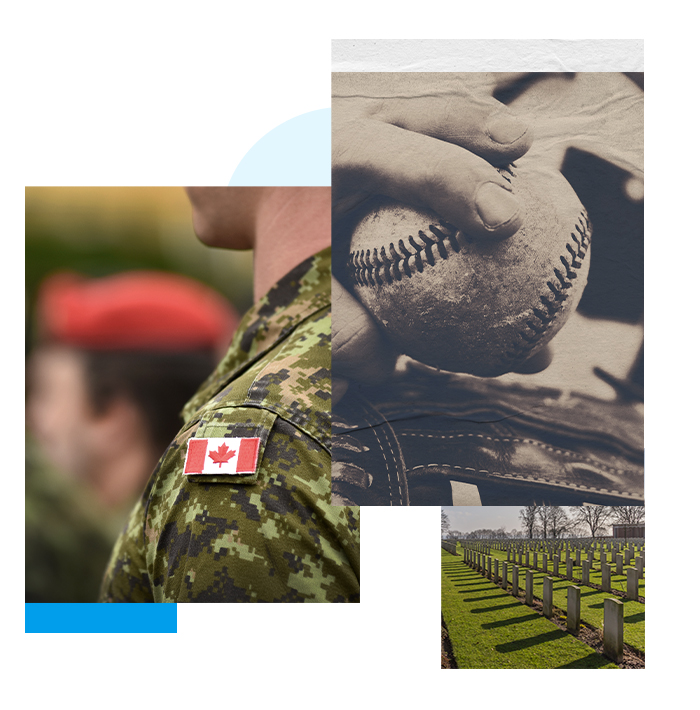
It’s summer and baseball season is in full swing. As Canadians around the country may be throwing the ball back and forth in their backyards or watching their favourite little league or professional teams play ball, we’re taking a look back to the First World War and how important this sport was to Canadian troops.

Although baseball is primarily considered a North American sport made famous by our neighbours to the south, it originated from older European bat-and-ball games, most notably the British game of ‘rounders’. Baseball made its way to Canada in the early 19th century, and quickly became popular. As a matter of fact, the legendary Babe Ruth hit his first professional home run on Canadian soil on September 5, 1914, at a stadium located on Center Island in Toronto!

Of all the popular sports played by troops stationed during the Great War, including rugby, cricket and soccer, baseball was the most distinctly North American. When soldiers were off-duty, sports were considered by military leaders (and by extension, the general public) to be an acceptable ‘gentlemanly’ pursuit, as opposed to gambling, drinking and carousing. In addition, the general rules and conduct of sport were considered to be a positive moral influence on fighting men. As the fighting between the Allies and the Germans devolved into trench warfare, there was a lot of downtime behind the lines, and during that time, quite a lot of baseball was played in organized military leagues.

Before the War, Toronto, Ontario was home to a thriving baseball scene. Soon the sport spread quickly across Canada.

Here are a few baseball facts from WWI:

01 / Baseball was actually one of the most popular games played by Canadian soldiers as an off-battlefield pastime, to the point where the American League of Major League Baseball actually donated equipment to Canada’s Minister of Defence!

02 / In addition to his service in the field, future Prime Minister Lester B. Pearson counted hitting a home run in a military baseball league among his accomplishments after returning from the war.

03 / Popular trench slang employed baseball terms to describe war as ‘the game’ or ‘the sport’. One’s first deployment to the battlefield was called ‘the rookie season’, heavy artillery fire was known as ‘home runs’, a soldier’s death was described as when a man’s ‘innings were called’, and, in a reverse case of military words influencing wartime baseball, bad pitchers were called ‘duds’.

Are you inspired to explore history?

Discover historic event tours.

Start planning

Blogs connexes

Flowers

Forget Me Not: 5 Flowers That Help Us Remember

D-Day

D-Day 75: Remembering the Anniversary

WW2

How Bastogne played a pivotal role during WWII