The zipline is in the Arenal region on Day 3 of the tour, and the tour page notes that weight and size restrictions apply for safety reasons. Restrictions vary by operator, but typical Arenal zipline requirements include a minimum weight around 40 kg (88 lbs), a maximum weight around 136 kg (300 lbs), and a minimum height of approximately 110 cm. EF Tours will provide the specific operator requirements in pre-trip materials so families can plan accordingly. Students with heart conditions, back problems, or a significant fear of heights should consult a doctor before the trip. Alternative activities are available for students who cannot or choose not to participate.
The Government of Canada recommends that travellers to Costa Rica be up to date on routine vaccinations and consider Hepatitis A and Typhoid vaccines. The Arenal and Sarapiquí regions are warm, lowland rainforest areas where mosquitoes are more active, so insect repellent with DEET is recommended. While malaria risk is very low in the areas this tour visits, some families choose to consult a travel health clinic for personalized advice. Students should bring any personal medications they need along with a basic first-aid kit. EF Tours provides a comprehensive health and safety guide in pre-trip materials.
Wildlife sightings are one of the highlights of this tour, and the Arenal and Sarapiquí regions are among the most biodiverse in Costa Rica. The Sarapiquí River corridor is home to howler monkeys, sloths, toucans, iguanas, and over 500 bird species, making it a standout destination for wildlife watching. La Fortuna, the base for the Arenal days, is also one of the best areas in the country for spotting sloths. On Day 5, students visit Tirimbina Biological Reserve in Sarapiquí, a dedicated nature reserve where guided walks give students a structured wildlife and ecology experience. Specific sightings are never guaranteed in a natural environment, but the local naturalist guides know exactly where to look. Binoculars are a great item to pack.
The Impressions of Costa Rica tour weaves cultural immersion throughout the itinerary. On Day 2, students tour a working coffee farm in the Arenal region and learn how Costa Rica's most famous export is grown and processed. On Day 3, a cooking class introduces traditional Costa Rican cuisine. Day 4 includes a salsa lesson that connects students to the music and movement culture of the country. Day 5 is the most immersive: students visit a pineapple farm before heading to Tirimbina Biological Reserve in Sarapiquí, where they hike across a suspension bridge to a former cocoa-growing plot, learn about the cacao tree and the history of chocolate, and finish with a tasting. An optional Folklore Evening on Day 6 rounds out the cultural thread with marimba music, a traditional dance troupe performance, and a Costa Rican dinner with city views in San José.
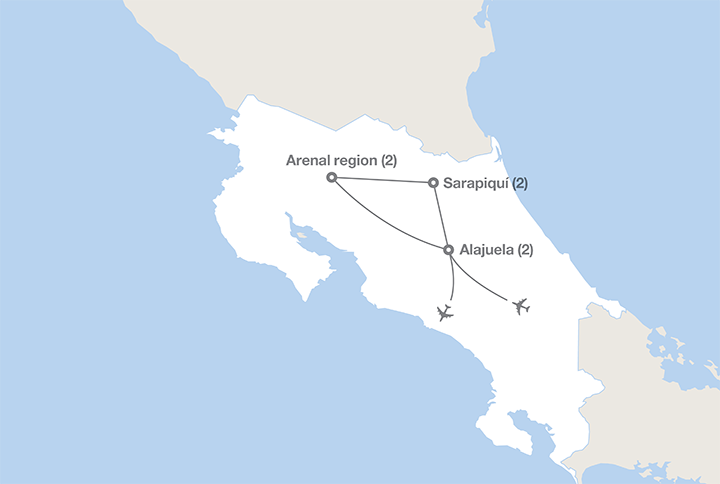
The tour moves between three main areas: Alajuela to the Arenal region on Day 2, Arenal to Sarapiquí on Day 4, and Sarapiquí back to Alajuela through Braulio Carrillo National Park on Day 6. Costa Rica is a small country, but its mountainous terrain means travel between destinations takes longer than the distances suggest, and roads between these regions are winding. The tour uses a private, air-conditioned coach, and the Tour Director uses travel time for group briefings and activities. Students prone to motion sickness should come prepared. The jungle and volcanic landscape views along the way make the drives genuinely scenic.
The Arenal and Sarapiquí regions are warm and humid year-round. Costa Rica has a dry season from November through April and a rainy season from May through November, with afternoon showers most common in the rainy months. Students should pack lightweight, moisture-wicking clothing, a reliable rain jacket or packable poncho, and sturdy closed-toe shoes suitable for hiking and walking on uneven terrain. A small waterproof daypack is essential for keeping electronics and valuables dry during rainforest and reserve visits. The Explore Costa Rica itinerary stays in lowland and mid-elevation regions throughout, so heavy layers are not needed.