LEARNING GUIDE
Academic Enrichment Programs: A Complete Guide for Teachers and Parents
Mariam M. | May 20, 2026
LEARNING GUIDE
Mariam M. | May 20, 2026
)
)
Your student finishes their work in half the time it takes the rest of the class, then spends the remainder of the period staring out the window. Or maybe they light up when the conversation turns to history, robotics, or art, but the school day never quite gives them the space to go deeper.
Academic enrichment programs fill that gap. They offer structured learning experiences beyond the standard curriculum, giving students the chance to explore subjects that excite them, build new skills, and grow in ways that regular classes often can’t support.
This guide walks you through what enrichment actually means, the different types available, how to choose the right program, and how teachers and parents can work together to help students thrive.
)
Academic enrichment refers to structured learning opportunities that go beyond the standard curriculum. Think of it as the difference between studying a concept in a textbook and seeing it play out in the real world, whether that’s through a robotics competition, a theatre production, or a guided walk through a city your students have only ever read about.
Enrichment programs offer in-depth exploration of subjects like STEM, arts, coding, language, and culture. They’re designed to spark curiosity and help students grow in ways that a packed school day doesn’t always allow.
You’ll typically find enrichment programs offered after school, during summer breaks, or through immersive travel experiences. The common thread? They all serve students who want more challenge, or who are eager to explore interests that don’t fit neatly into a standard timetable.
Here’s a question that comes up a lot: “Isn’t enrichment just tutoring with a fancier name?”
Not quite. Tutoring addresses gaps and helps students catch up with material they’re struggling to understand. Enrichment pushes students forward into new territory they haven’t explored yet.
Feature | Academic Enrichment | Traditional Tutoring |
|---|---|---|
Goal | Extend learning, explore new areas | Fill knowledge gaps, improve grades |
Student focus | Students seeking challenge or deeper exploration | Students struggling with current material |
Approach | Project-based, experiential, exploratory | Repetition, practice, remediation |
Outcome | New skills, broader perspectives, confidence | Mastery of existing curriculum |
Tutoring is remedial. Enrichment is aspirational. Both matter, but they serve very different purposes.
Enrichment comes in many forms. Understanding your options makes it easier to find the right fit for your students or your child.
Most enrichment programs deepen a student’s understanding of one subject. Travel-based learning does something different: it connects multiple subjects at once. A single trip can weave together history, geography, language, art, and social studies in a way that no after-school program or summer workshop can replicate.
What also sets travel apart is how it changes the dynamic between teachers and students. When you’re navigating a new city together, problem-solving through a delayed train, or sharing a meal in a place neither of you has been before, the usual classroom hierarchy softens. You see sides of your students that four walls never reveal, and they see a different side of you, too.
There’s also the question of retention. Students tend to remember what they physically and emotionally experienced, not just what they read or heard. A lesson on the European Union becomes concrete when your class is crossing borders between countries. A unit on biodiversity sticks differently after students have hiked through a rainforest. Research in cognitive science backs this up: multi-sensory, emotionally engaging experiences create stronger and more durable memory traces.
Our tours are built specifically around this idea. Itineraries are designed with curriculum connections in mind, so the travel itself becomes the lesson. Whether your students are tracing the arc of Canadian history through Europe, exploring architecture and identity across Spain, or studying ecosystems in the field in Costa Rica, the experience is structured to reinforce what you’re already teaching back home.
For many teachers, this is the enrichment format that produces the most visible transformation in their students. Not because travel is inherently magical, but because it asks students to be present, adaptable, and engaged in ways that no other learning environment quite demands.
Robotics clubs, coding camps, and science competitions fall into this category. They encourage hands-on problem-solving and often spark interests that shape future career paths. In Canada, university-affiliated programs like those at the University of Waterloo and University of Toronto offer summer STEM experiences for high school students looking to go deeper.
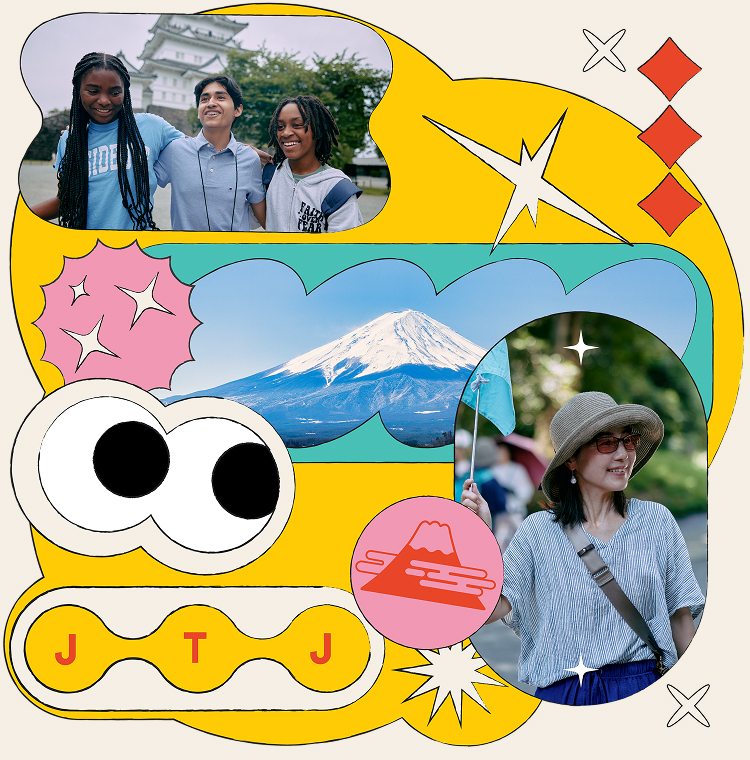
If you're looking for a program that combines STEM learning with real-world context, our Japan STEM tour is a strong example. Students explore innovation and technology where it's actually happening, connecting classroom concepts to industry and culture in ways a textbook can't replicate.
Rather than learning vocabulary from flashcards, students in immersion programs develop language skills through direct experience. Cultural exchanges and study abroad opportunities help young people understand the world from perspectives different from their own. Even a short immersion experience can shift how a student engages with language back in the classroom. Our French Language Immersion tour is built around this idea. Students practise French in real conversations, in real settings, with the kind of context and motivation that a classroom exercise can't quite match.
Visual arts classes, theatre groups, music lessons, and creative writing workshops nurture self-expression. For students who think in images, sounds, or stories, this type of enrichment can be transformative.
Some students have already mastered grade-level content and are ready for more. Advanced coursework, honours classes, and subject-specific competitions provide the intellectual challenge they’re looking for.
Why does enrichment matter? The outcomes extend far beyond report cards.
Enrichment programs ask students to analyse, question, and solve complex problems. This kind of thinking goes well beyond memorizing facts for a test. It’s the kind of skill that transfers to every area of life and every subject they’ll encounter.
New experiences, especially ones that push students outside their comfort zone, build self-assurance. Whether it’s presenting a project to strangers, competing in an unfamiliar setting, or navigating a challenge without a parent nearby, those moments change how students see themselves. Teachers who’ve led educational tours often say they barely recognize the same students by the end of the trip.
Exposure to different perspectives prepares students for an interconnected world. Whether through travel or cultural programming, enrichment broadens how young people understand their place in a larger community. In a country as diverse as Canada, that skill matters more than ever.
When learning connects to real-world applications and personal interests, it stops feeling like a chore. Enrichment can reignite curiosity and make education feel relevant again, especially for students who’ve grown restless in traditional classroom settings.
)
)
)
)
Teachers are uniquely positioned to champion enrichment, and even lead it themselves. Here are five ways to get started.
Look for the signs: finishing work early, asking deeper questions, or showing visible boredom with standard material. Students who are ready for more often signal it clearly, even if they don’t say it directly.
Extend lessons beyond the textbook. Field trips, guest speakers, and project-based learning all help students see how concepts apply outside school walls. A unit on human rights becomes more meaningful after students have walked through the Canadian Museum for Human Rights in Winnipeg. A history unit comes alive when students visit the places they’ve been reading about.
Guide parents toward enrichment that complements what you’re teaching. An environmental field study for your geography students, or a theatre intensive for your drama class.can reinforce classroom learning in powerful ways.
Many teachers organize and lead their own educational travel. We take care of the logistics, from itinerary design to on-the-ground support, so you can stay focused on the learning.
Ongoing communication helps identify which activities might benefit a student most. Parents appreciate guidance from someone who knows their child’s strengths and interests firsthand. And when a teacher recommends a program, it carries weight.
)
)
Whether you’re a teacher recommending options or a parent evaluating them, here’s practical guidance to help you decide.
Start with what excites them. Forced enrichment often backfires. Ask directly what they want to explore. You might be surprised by the answer.
Look for programs that stretch students beyond their comfort zone, but in a structured, supportive way. Growth happens at the edge of familiarity, not deep inside it.
Program leaders with relevant expertise and experience working with young people make a significant difference in quality. Don’t hesitate to ask about backgrounds and training.
Content, expectations, and social dynamics vary widely. Verify the program suits the student’s specific developmental stage. What works for a Grade 6 student won’t necessarily work for someone in Grade 10.
The best enrichment feels engaging, not like extra homework. Learning works better when it’s enjoyable, and students can tell the difference immediately.
Programs that encourage collaboration and peer interaction offer added value beyond academic content. For many students, the friendships formed during enrichment are just as valuable as the skills learned.
Ask about supervision ratios, safety protocols, and staff training. Reputable providers always prioritize creating a safe, supportive environment for every participant. For travel-based programs, look for providers with dedicated on-tour support teams and established emergency response systems.
Give students a voice. They’re more likely to engage fully when they feel ownership over the choice, and they’ll have a better experience because of it.
)
)
)
)
)
)
Cost is a practical concern for every family. Prices vary significantly depending on the type of program.
After-school programs: Generally the most affordable, often subsidized by schools or community organizations.
Summer camps and workshops: Mid-range, varies by duration and specialization.
Travel-based educational programs: A higher investment, but typically all-inclusive with flights, accommodations, meals, and guided experiences. The value often reflects the depth and lasting impact of the experience.
Duration, destination, group size, included amenities, and instructor expertise all influence the final price. When comparing programs, look at what's bundled in. A program that includes meals, transportation, and supervision may look pricier at first glance but can cost less overall than one that charges for each separately.
Many providers offer financial aid, scholarships, fundraising support, or flexible payment plans. For example, EF’s Canadian Global Citizens Fund has committed $1 million over four years to help make educational travel accessible to more Canadian students. Always ask what’s available. You might be surprised by the options.
Where do you start looking? A few practical steps can help narrow down the search.
Teachers, guidance counsellors, and administrators often know about reputable local and national opportunities. They’re an excellent first resource and can point you toward programs that align with a student’s interests and your curriculum.
Summer camps and workshops: Mid-range, varies by duration and specialization.
Travel-based educational programs: A higher investment, but typically all-inclusive with flights, accommodations, meals, and guided experiences. The value often reflects the depth and lasting impact of the experience.
Libraries, community centres, museums, and universities frequently offer enrichment programs for different age groups. Many of these options are affordable or even free.
For broader experiences like educational travel, research established organizations with strong track records and robust support systems for students and teachers. We offer over 100 teacher-led tour itineraries across six continents, with built-in curriculum connections and comprehensive support from planning through to the trip home.
At its core, academic enrichment is about extending learning beyond four walls. Real-world, experiential learning creates lasting impact because it shows students that education doesn’t need a roof.
Travel, in particular, can transform how students see themselves and the world around them. When a student has to adapt to an unfamiliar environment, work through a language barrier, or make sense of a culture different from their own, they’re building skills that no worksheet can teach. And those skills, adaptability, empathy, resilience, tend to show up in every part of their lives afterward.
For teachers, it’s a chance to see your curriculum come alive and to connect with your students in a completely different way. The classroom you build on tour often becomes the one students remember most.
)
Most students can begin age-appropriate enrichment activities as early as elementary school. The right timing depends on individual readiness and interests. For travel-based enrichment, many programs are designed specifically for high school students.
No, enrichment programs supplement, not replace, standard curriculum. They provide deeper exploration and real-world application of concepts students learn in school, but they’re not designed to cover core academic requirements.
Balance is key. Enrichment works best when it feels exciting rather than overwhelming, leaving time for rest, play, friends and family. If a student starts dreading their activities, it might be time to scale back.
Yes, educational travel is one of the most immersive forms of enrichment available. It connects classroom subjects to real-world places, cultures, and histories, and it builds skills like independence, adaptability, and cultural competence that are difficult to develop any other way.
Look for increased enthusiasm for learning, new questions about the subject, improved confidence, and a desire to continue or explore related topics. The signs are usually clear: engaged students talk about what they’re learning.
Look for a provider that handles logistics end to end, offers 24/7 on-tour support, has a strong safety record, and builds itineraries with real curriculum connections. Teacher-led models, where you travel with your students and shape the experience, tend to create the most meaningful outcomes.
Explore tours that connect to what you teach and change how your students see the world.



Social skills through collaboration
Many enrichment activities require teamwork. Students learn to communicate, compromise, and build relationships with peers who share their interests. For some students, this is where they find their people.